Live e-commerce dashboard

Open it
ulc

Custom AI systems · Built by an operator · Owned by you

Your business grew.Your systems didn't.

Vulc builds the AI agents, dashboards and automations your business runs on. Our deepest ground is e-commerce, and the same architecture runs for agencies, software and service businesses. Custom work, approval-first, yours forever.

Systems we build against

  • Shopify
  • Klaviyo
  • Meta
  • Google Ads
  • TikTok
  • Pinterest
  • Stripe
  • Google Analytics
  • Search Console
  • Recharge
  • Loop
  • Yotpo
  • Loox
  • Chargeflow

If a tool has an API, we wire it. The stack above is where we have built directly, most of it e-commerce, and another 101 tools are documented and ready: the helpdesks, CRMs, billing systems and project tools the rest of the work runs on. See the full surface

Approval-first, live

Agents do the work.You keep the call.

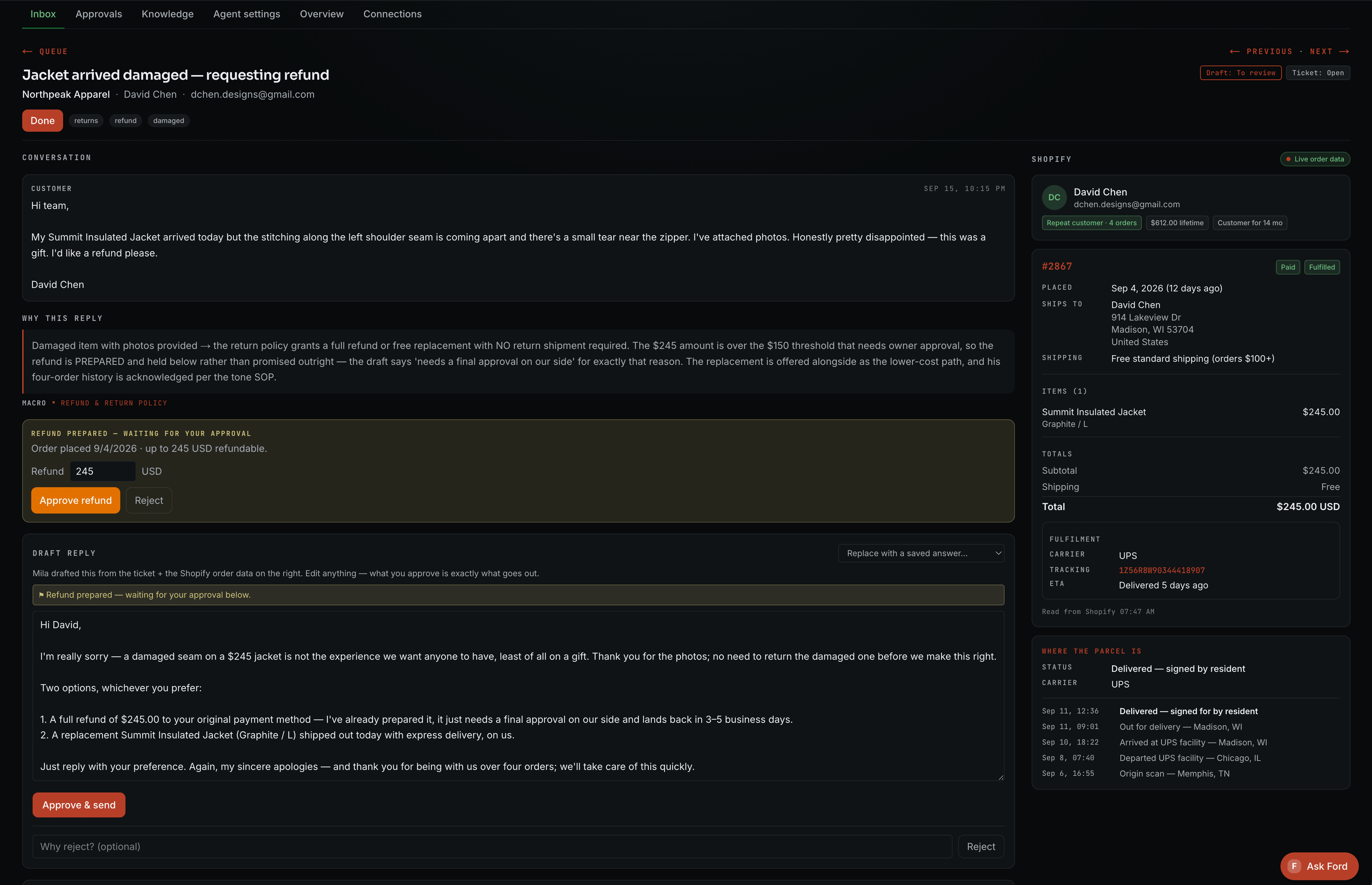
A store's support queue, running the way every Vulc system runs: the work prepared by agents, shipped on your say-so. Swap the orders for client threads or trial accounts and the shape holds, which is why the switchable version in the agent library reads the same.

Support agent · illustrative

2 of 3

resolved without you

Question about last invoice

#2214 · matched to the billing record, answered

2m

Resolved

Delivery status request

#2209 · looked up, replied with the current window

6m

Resolved

Refund above your threshold

#2201 · draft reply ready, waiting on approval

9m

Needs your call

  • 14:32 · draft reply prepared for #2201 · routed to you
  • 14:31 · billing record matched for #2214
  • 14:28 · status update sent for #2209

approval-first. nothing ships without you.

What we build

Four builds.One standard.

Four shapes, one rule: the system fits your operation and you keep the keys. E-commerce is the operation we know in our hands, and the same four shapes fit an agency, a software company or a service business, because the repeating work is what we build around.

01

AI agents

Support, retention, ads, listings, research and more. They draft the work and wait for your sign-off.

02

Dashboards

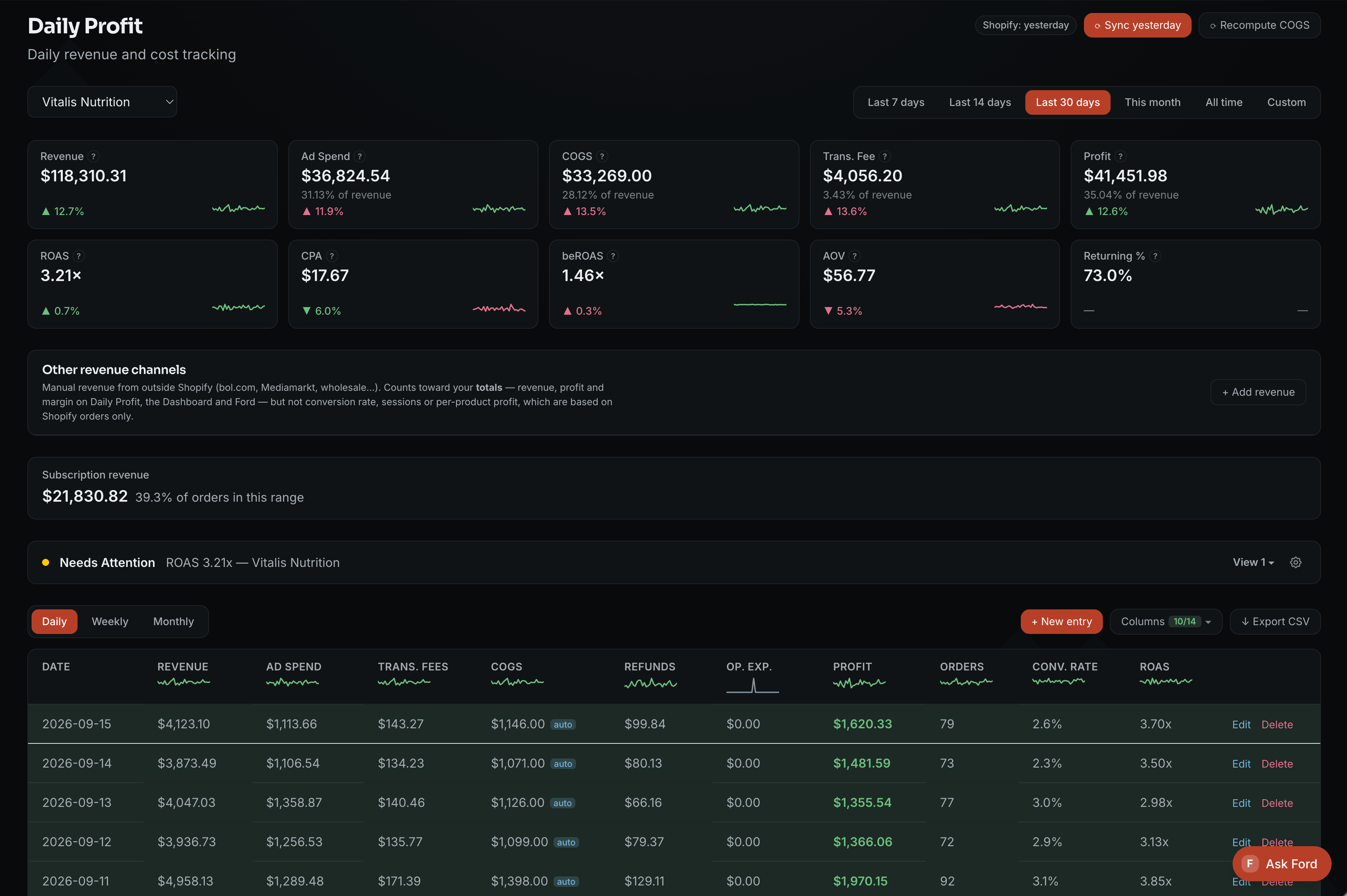
One screen for the numbers you actually run on, down to true profit per product or service.

03

Automations

The repeating work between your tools, wired end to end with approval gates where money moves.

04

Full systems

Agents, dashboards and automations working as one system, fitted to how you already operate.

Up close

See it work.Watch it wait.

Four small windows from systems like the ones we forge. The panels are illustrative. The real ones are built from your own workflow, which is why no two ship the same.

The approval inbox

Routine work resolves on standing approval. The rest arrives drafted, waiting on your call.

An agent for every role

One responsibility per agent, forged around the role as your business actually runs it.

Browse the library

It learns your business

Set up on your own material, from the tone in your replies to the exceptions your team already solved.

Gates where you set them

Below your line it runs on standing approval. Above it, everything holds for your sign-off.

The market, measured

Most AI projects stall.The research says why.

These numbers are not ours, and that is the point. This is the market Vulc builds against.

95%

of enterprise GenAI pilots show no measurable P&L impact (MIT, 2025)

40%+

of agentic AI projects will be canceled by end of 2027 (Gartner)

130

agentic AI vendors Gartner estimates are real, of thousands selling

The pattern behind the failures: generic systems, no gate before they act, rented from vendors who can leave. Every Vulc decision runs the other way.

The difference

Rented runs out.Owned runs on.

Both columns are true. One of them compounds for you.

Fit

Rented software: Built for the average company in your category.

A Vulc build: Built around your operation and your stack.

Cost shape

Rented software: A subscription that runs as long as you do.

A Vulc build: One build, plus a light retainer if you want it.

The keys

Rented software: The vendor holds them, and the roadmap.

A Vulc build: You hold them: code, credentials, documentation.

Workflow

Rented software: Yours bends to the tool.

A Vulc build: The system bends to you.

See it running

The whole system,open in your browser.

Before Vulc built for anyone else, Maarten built an entire AI commerce platform solo: an orchestrator, six specialists, approval gates on every write, true per-product profit underneath. It runs as an open demo on sample data, so you can click through a real e-commerce operating dashboard before you ever speak to us. The same architecture is what gets fitted to an agency roster or a software business.

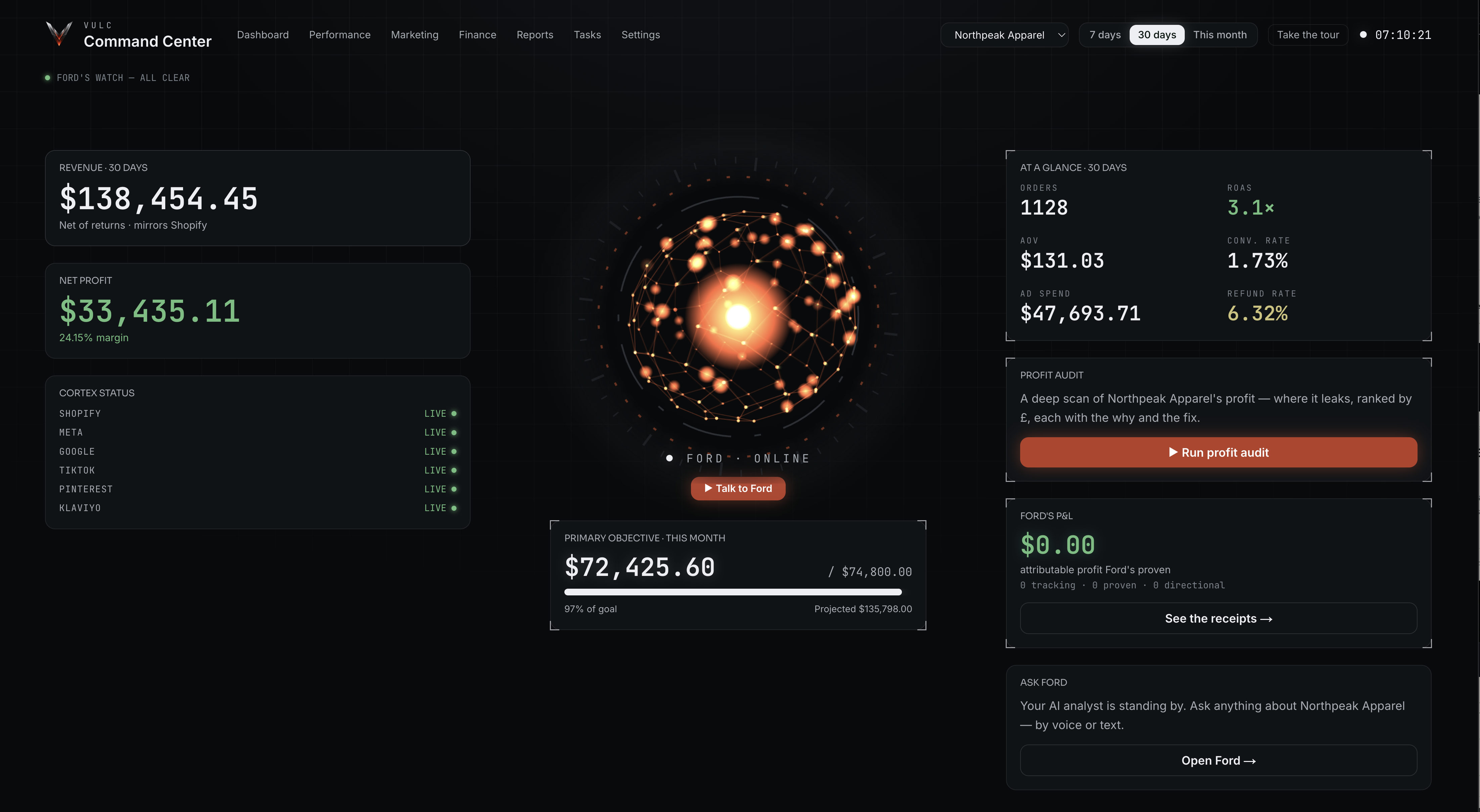
The demo's command center: revenue and net profit tiles, six live integrations, the orchestrator online, and a profit audit ready to run.
The command center you land in. Two sample storefronts, a fashion brand and a subscription supplements brand, with six integrations live. Sample data throughout.

6

specialist agents in the platform

14+

live integrations wired

4

years operating online businesses

The forge process

From anvil to handoff.

Four stages. Each one ends in something you can open and check.

01

The Anvil

A working session on your real operation, ending in an honest verdict: build, wait, or not a fit.

02

The Forge

Your system, built for your stack and your edge cases. Progress shown in working software.

03

The Quench

Security, permissions, failure states and approval gates, tested against real volume.

04

The Handoff

Code, credentials, documentation, runbooks. It runs in your environment, as yours.

Security by architecture

Your environment.Your keys.

Every system we ship runs on your accounts, inside your infrastructure. Agent credentials are scoped per integration, and every write stops for your sign-off. When you want to know why something happened, the audit trail already holds the answer: which agent acted, on what, and who approved it.

There is no Vulc cloud to breach, and the badge wall you might expect here is deliberately absent: your deployment inherits its posture from platforms you already trust, under contracts that are already yours. The full security pack arrives on request, no call required first.

Audit trail · illustrative

  • 07:41 · support agent · read order #4482 · scope: orders.read
  • 07:42 · reply drafted · held at the approval gate
  • 07:44 · approved by you · sent · logged
  • 07:52 · write attempt outside scope · blocked · flagged

every action on record. every approval yours.

  • Your environment
  • Least privilege
  • Approval gates
  • Audit trail
  • Loud failure
  • Clean handoff

FAQ

Straight answers.

What is Vulc?

A studio that builds custom AI systems for online businesses, e-commerce above all: agents, dashboards and automations that run on your stack and belong to you. Not software, not seats, not a subscription.

Can I see one working before I book?

Yes, and you do not have to ask. The demo is the platform Maarten built, open to anyone at demo.vulc.ai on sample data: an e-commerce operating dashboard with two sample storefronts, six integrations live, the orchestrator running and approval gates on every write. Click any screen, run the profit audit, break whatever you like. It resets itself.

What does a build cost?

Scope and price are set after the audit, anchored to what this work is already costing you: a hire you were about to make, a team's week going on repeating work, a stack of tools renewing for another year, or an agency retainer that never compounds. The audit itself is free, and you get the verdict whether or not you build with us. Retainers are separate and optional. The pricing page explains exactly what moves the number.

How long does a build take?

That is set in the Anvil session along with the scope. You get a fixed timeline before the build starts, and you see progress in working software rather than status updates.

What does approval-first mean?

The system prepares the work: replies, changes, reports. Nothing ships until you approve it. You keep the final say over everything that touches customers or money.

Who builds it?

Maarten, the founder. Around four years operating online businesses and a full AI platform built solo. Every client works with him directly, from the audit to the handoff.

What happens after handoff?

You own the delivered system outright: code, credentials, documentation, runbooks. It runs in your environment, on accounts that were yours from day one. We keep rights only to generic, reusable building blocks and the know-how, never to your data, your configuration or the system itself. If you want ongoing optimization there is a monthly retainer; if not, it keeps running.

What does the retainer cover?

Monitoring, tuning and extending your system: new edge cases, new integrations, model updates. Light by design. It exists to improve the system, not to rent it back to you.

How is security handled?

The system runs in your environment with scoped permissions per integration. The Quench stage hardens failure states and approval gates before anything touches production.

Who is it for?

Online businesses where manual work has become the bottleneck. E-commerce is where we go deepest, and agencies, software companies, subscription and service businesses qualify on the same test: enough repeating work to be worth systemising, tools that expose their data, and an owner close enough to name what is eating the hours. The Built for pages show how it looks per shape of business, and the category on your invoice is not the test.

How do we start?

Book an Anvil session: 30 minutes on your real numbers. It ends with an honest verdict: build, wait, or not a fit.

Forged once.Yours forever.